The most ephemeral but powerful forces in the world are our thoughts. These shape our perception of the world, ourselves, and eventually drive us to make the decisions that we do. I find it difficult to imagine an experience without a conceptualization or an intellectualization of experience. The dissemination of ideas has shaped the world, defined civilizations, cultures and values of nations, movements, cults and individuals. In more modern times our thoughts have defined and shaped companies, businesses and markets.
The technologies known to have impacted the world most strongly are the ones that shape information dissemination. The impact of Johannes Gutenberg's discovery of the printing press was a technology that allowed for writers to shape our present perception of the past. It also led to the protestant reformation whose impact is still felt in the western world today defining a culture of religious pluralism and laying the ground for the scientific revolution.
The same zeitgeist is felt today with the internet; shaping our ideas of good and bad, success and failure through algorithmic content platforms where individuals vie for resources more valuable than gold: attention. The monetization of attention has been immensely profitable to consumer internet applications allowing businesses to pay for targeted advertisement in efforts to change your mind in the name of profit. When you have more personal data about your users, you are able to profile what and when they are the most susceptible to influence. Nothing in the history of human civilization has shown to be as effective at changing your mind than highly personalized targeted ads.
What are you if not only an idea in your mind?
The Algorithm
The dominant driving force of the collective narrative rests in the algorithm of social milieu, the driving force optimizing for engagement not necessarily for wellbeing or truth. If you yourself have resources to expend, you can spend it to leverage the algorithm to shape the minds of internet consumers to your own motives. Changing what someone believes is an existential phenomenon, for what people believe determines their lived experiences, their reality. The algorithm is thus a reality distortion tool, enabling thought/cult leaders, governments, the politically motivated, businesses to shape the very substrate of who you are.
The algorithm's sophistication was a natural byproduct of capitalist incentives to drive engagement and sell more targeted advertising and is both a great tragedy and a great opportunity for anyone willing to pay for mindshare. Venture Capitalists, Entrepreneurs and opportunists were quick to leverage the latest and greatest information dissemination technology for power.
The acceleration of the commoditization of the human experience has been the greatest trick we have played on ourselves. Forsaking ourselves for nothing.
To bring awareness to the ways in which our own minds are impacted is groundless when you have no way to distinguish your own ideas from the ideas paid to be engrained within you. Not to say that we are stupid or naive, but the sophistication of the algorithm is so great. It is not a fair fight to pit our slowly biologically evolving brains against the latest and greatest technology purpose built and optimized to get you to think anything for a price. Even when one has strong self-awareness and discipline, the moment one engages with an algorithmic content machine, they must acknowledge that they are being shaped and sculpted by the interests of others through the information they consume.
Our monkey brains stand no chance.
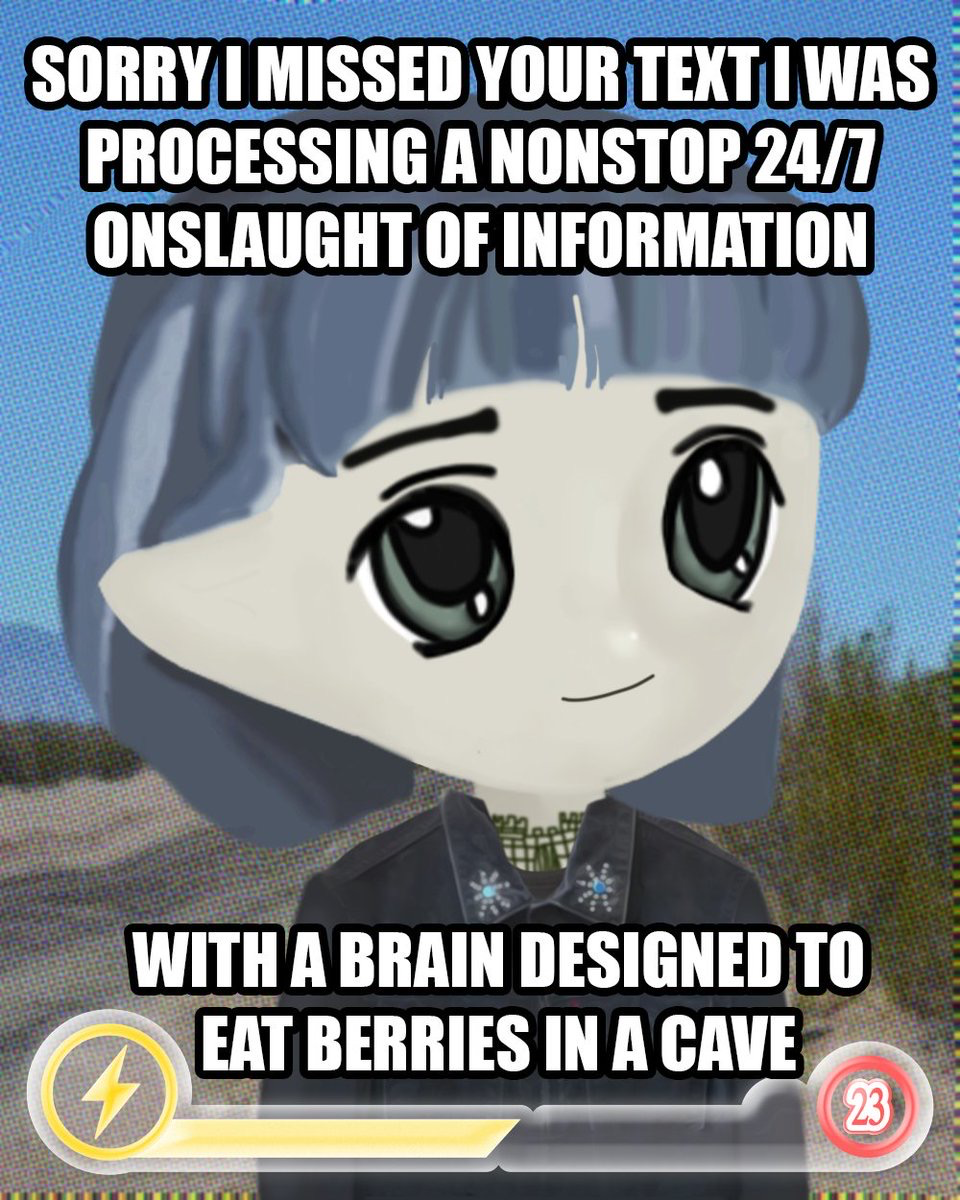
It's no mystery to anyone that there are dramatic byproducts of consuming information at such a rapid pace.
We are quick to adopt ideas without having any skin in the game or even forethought on the bigger picture. The speed at which things seem to change leaves newer generations unperturbed by high-contrast narratives. Generation Z, known for its nihilistic irony, is left like a leaf in the wind, unbothered by even the most dramatic of ideas.
The most powerful countries in the world, Russia, China, and the USA all differ in how they control the flow of ideas via technology about themselves but also each other.
There is nothing online that isn't either being used to gain your attention or being paid for by someone for you to see.
Imprisonment of Perception
My initial takeaway from this reality was to attempt to protect my mind, ideas, and beliefs from such powerful tools of chaos. For many years I have strongly resisted any sort of social media or participating in algorithmic content platforms. I had for many years removed my social media accounts, made efforts to be offline and reduce my digital identity and footprint as much as possible.
With values shaped by ideas from Eastern philosophy and surveillance capitalism, I had selfishly wanted to avoid the perception of others altogether. When people have an idea of who you are, what you are like and perceive you to have properties x, y, or z, they bestow upon you an inevitable expectation of who you are to them. This can be limiting and in many cases push you to fulfill expectations of others without continuously redefining yourself.
Life by the Dunbar Number
It turns out that consuming a global narrative is overwhelming and difficult. The amount of information consumed with no ability to impact it works against our biology.
In the 1990s a British anthropologist Robin Dunbar noticed that primates with larger neocortices tended to live in larger social groups. Studying the size of these groups he coined the Dunbar Number to be 150 as the cognitive limit for the number of meaningful relationships in our life. The study also proposed a strong upper bound of 1500 as the strict upper bound on the amount of people we can recognize.
So up until now I had made consistent but perhaps futile attempts to live by the Dunbar number, focusing on the relationships I have with the people in my life. Trying to not pay heed or get wrapped up in all the suffering of the world that I couldn't do anything about.
Skin in the Game
In order to see things as they are you must first abandon hope of finding an ideology to stand upon. There is only moral subjectivity, and thus nothing concrete exists. Even the most seemingly sinister of actors believe what they're doing is right.
Without objective truth, values are revealed by their costs. Authentic beliefs require sacrifice. Withdrawal from the algorithmic arena is safe. It costs nothing. But if ideas matter, if your perception of reality matters, then silence is surrender.
Withdrawal doesn't protect you; it just means surrendering the battlefield entirely. If ideas disseminate through these platforms, then staying out means your ideas don't exist in the cultural conversation at all. Yes, you'll be manipulated. But participating with awareness, eyes open to the distortion, is better than the guaranteed defeat of non-participation. Writing becomes an act of defiance not against the algorithm, but against the fear of being shaped by it.
May you be blessed by the milieu of the internet.